33
Dimension Metrics
364
Survey Responses
ILBIJERRI Theatre Company is one of Australia's leading theatre companies and has championed the work of First Peoples creatives for over 30 years. It is the longest-running First Peoples theatre company and brings bold, innovative performances to all kinds of venues across the country. The company prides itself on being committed to celebrating and sustaining First Peoples voices and fostering an environment where these voices can grow and be explored. ILBIJERRI has two Elders In Residence, N’arweet Dr Carolyn Briggs AM and Uncle Larry Walsh, who contribute to the strategic, artistic and cultural direction of the company and work to nurture future generations.
ILBIJERRI Theatre Company engaged Culture Counts to collate results from their 2024 evaluations, from a range of cohorts. Surveys were distributed to audiences, artists/creatives and professional development program participants.
364 responses were collected from these groups across 2024.
Each survey contained a range of ‘dimension’ questions, asking stakeholders about their experience of the event. These dimensions have been developed and tested in collaboration with industry, practitioners and academics to measure the impact and value of arts and cultural events and activities.
Appropriate dimensions were chosen based on their alignment with ILBIJERRI's strategic objectives.
| Domain | Dimension | Dimension statement |
|---|---|---|
| Cultural | Pride | It strengthened my cultural pride |
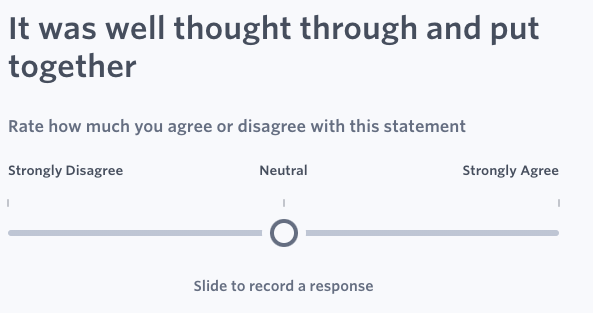
| Qualities | Rigour | It was well thought through and put together |
| Social | Safe | It made me feel safe and welcome |
| Custom | It was too deadly | |
| There was truth telling that allowed me to feel seen and heard | ||
| It gave me a better understanding of First Peoples and their Communities |
| Domain | Dimension | Dimension statement |
|---|---|---|
| Cultural | Pride | It strengthened my cultural pride |
| Challenge | It challenged me to think in a different way | |
| Insight | It helped me gain new insight or knowledge | |
| Imagination | It opened my mind to new possibilities | |
| Heritage | It made me feel connected to a shared history/culture | |
| Community | Decision-making | It enabled me to get involved in community decision-making |
| Leadership | It inspired me to play a leadership role in the community | |
| Qualities | Rigour | It was well thought through and put together |
| Organisation | The project was well organised | |
| Intensity | I felt deeply involved in the process | |
| Clarity | I was clear about what we were here to achieve | |
| Social | Resilience | I strengthened my ability to overcome challenges |
| Contribution | I felt like my contribution mattered | |
| Confidence | I feel more confident about doing new things | |
| Voice | I felt my ideas were taken seriously | |
| Economic | Prospects | It has made me feel confident about future employment prospects |
| Practice development | It contributed to the development of my arts practice or business | |
| Opportunity | It opened up new opportunities for me | |
| Networks | It connected me with other people in my field | |
| Independence | It improved my financial situation | |
| Collaboration | It provided opportunities for collaboration |
| Domain | Dimension | Dimension statement |
|---|---|---|
| Cultural | Challenge | It challenged me to think in a different way |
| Insight | It helped me gain new insight or knowledge | |
| Community | Belonging | It helped me feel part of the community |
| Custom | Theatre shows like Goodbye Aunty Flo are a good way to encourage talking about health and well-being | |
| I think Goodbye Aunty Flo will reduce stigma and discrimination around menopause | ||
| I think Goodbye Aunty Flo is a culturally safe way to encourage talking about menopause | ||
| I would seek treatment or support for menopause after watching Goodbye Aunty Flo, or recommend treatment to my friends/family | ||
| I learned something new about menopause | ||
| The performance increased my understanding of family violence | ||
| I feel more confident to take a stand against family violence in my community | ||
| I now have a greater understanding of where I can go for support if I, or someone I know, is experiencing family violence | ||
| The performance increased my understanding of the barriers faced by First Peoples in reporting family violence |
| Domain | Dimension | Dimension statement |
|---|---|---|
| Cultural | Insight | It helped me gain new insight or knowledge |
| Qualities | Captivation | It held my interest and attention |
| Economic | Opportunity | It opened up new opportunities for me |
| Skills | I gained new skills |
Dimensions are assessed on a Likert scale, in which respondents move a slider to a point that indicates whether they agree or disagree with the dimension statement. An example of a dimension question in the Culture Counts survey tool is presented below.
The diverse approach to evaluating various programs and performances has allowed ILBIJERRI to ascertain a holistic view of their impact. This included audience perceptions of performances such as Big Name, No Blankets, Goodbye Aunty Flo and Scar Trees. Furthermore, the greater social impact of initiatives that coincide with these performances was evident in the evaluation results from 2024.
Findings from Goodbye Aunty Flo revealed that 92% of respondents learned something new about menopause, and Scar Trees results indicate that 85% of this sample agree that the performance increased their understanding of family violence.
In 2024, ILBIJERRI engaged a diverse profile of respondents including those amongst their Artist Development cohort, with 25% identifying as LGBTQIA+. Similar proportions (19%) were seen in the mainstage program cohort, as well as 17% of the respondents identifying as a person with disability.
Results from the longitudinal evaluation of ILBIJERRI's Executive Leadership program revealed that the entire sample of participants agreed that it inspired them to play a leadership role in the community, that it made them feel confident about future employment prospects and that it opened up new opportunities for them.
Other outcomes-based highlights are illustrated below.
Big Name, No Blankets celebrates the phenomenal journey and impact of Sammy Tjapanangka Butcher, one of the founding members of Australian music icons Warumpi Band in an epic rock 'n' roll theatre show. Making history as the first rock ’n’ roll band to sing in Aboriginal languages, Warumpi Band is acclaimed for creating our blak anthems: Jailanguru Pakarnu, My Island Home and Blackfella/Whitefella. Showcasing Luritja and Gumatj (Yolngu Matha) language and culture, the band amplified blak voices and stories while unifying listeners with the power of rock 'n' roll.
Survey respondents were asked to provide their age, gender and identity. An additional question regarding Aboriginal and/or Torres Strait Islander identity was also included. This data identifies the demographic sample of people who responded to the survey and attended the performance. It enables data to be matched to the wider population and responses to be filtered to understand differences in demographics.
The following charts show the proportion of survey responses captured for each of the age, gender and identity demographic questions.
The largest age group of respondents overall were in the over 60 age bracket (28%). This was followed by those aged 50–59 (24%) and 40–49 (19%). Those in the 30–39 cohort comprised 18% of the sample, and the 20–29 cohort comprised 10%. There were no respondents aged under 20.
75% of respondents were female, 21% identified as male and 4% identified in a different way.
19% of the overall sample identified as LGBTQIA+, followed by 17% as a person with a disability. 8% of respondents use a language other than English at home, and 5% were born overseas. The majority of the sample (60%) preferred not to disclose. A quarter of the sample identified as Aboriginal and/or Torres Strait Islander.
Survey respondents were asked to provide their postcode. The following charts show the proportion of survey responses captured for respondents' top suburb results.
Equal proportions of the sample reported living in Brunswick East and Thornbury (3.8%). Other respondents indicated they came from locations in the Northern Territory (Alawa, 2.5%) and Victoria (Williamstown, Elwood, Melbourne, Footscray and Fitzroy North, 2.5% each).
Survey respondents were asked if this was their first time engaging with ILBIJERRI Theatre Company, and if they would be likely to return based on their experience. A question about marketing methods was also asked to gather information on the most successful communication channels for respondents.
Results can be seen distributed in the charts below.
Just over half (55%) of the sample indicated that Big Name, No Blankets was their first time engaging with ILBIJERRI Theatre Company. The remaining 45% had engaged with the organisation previously.
The vast majority of the sample (98%) stated they would be likely to attend an ILBIJERRI Theatre Company production again, an outstanding result. Of this, 90% of respondents were ‘very likely’. There were no reports of respondents being ‘unlikely’ or ‘very unlikely’.
Similar proportions of respondents heard about the event via ‘Friend / family / colleague of artist’ (32%) or ‘Media coverage/interview/review’ (28%). This was followed by ‘ILBIJERRI Facebook/Twitter’ (22%) and ‘Word of mouth’ (18%). The least common method of hearing about Big Name, No Blankets was the ‘ILBIJERRI Website’ (5%). Respondents who selected ‘Other’ were asked to specify how they heard about the event. Various festivals (Rising, Sydney Festival and Brisbane Festival) were prominent results in the ‘Other’ responses.
Survey respondents moved a slider to indicate whether they agreed or disagreed with the included dimension statements in relation to the event. The first tab chart contains the response data for 'public' responses, showing the average result for each dimension.
The second tab shows the interquartile range of responses for each dimension. These ranges represent the middle 50% of responses, which are areas on the slider where most responses typically fell. Accompanying this range is the median result for each dimension (i.e. the most common response). Smaller ranges indicate similarity in agreement between respondents, whereas larger ranges indicate a wider spread of responses.
The Culture Counts platform provides various methods to capture survey responses at a minimal marginal cost. Achieving larger samples enables organisations to be more confident about the average results and that the opinions of the survey respondents are representative of all attendees. The accompanying margin of error chart shows the expected differences for the associated dimension results calculated at a 95% confidence level.
All dimensions measured as part of the Big Name, No Blankets evaluation demonstrated high averages, between 96/100 and 99/100. ‘Pride’ had the highest average, suggesting respondents were highly likely to agree that it strengthened their cultural pride. Furthermore, strong results for ‘Rigour’ and ‘Safe’ indicate that respondents also felt that it was well thought through and put together and that it made them feel safe and welcome.
At a 95% confidence level, the margin of error for dimensions ranged from 1.3% to 2.6%. This means that we can be 95% confident that if we surveyed the entire visitor population, the average outcome for 'Safe' would fall within 2.6% of the average generated by the sample.
Culture Counts uses a slider input to measure responses for dimensions as part of the evaluation methodology. This method provides a greater capacity to understand responses using the typical 'agree or disagree' Likert scale.
The chart below shows the percentage of people that agreed or disagreed with each of the statements and the strength of their agreement by respondent type.
The entire sample (100%) strongly agreed that Big Name, No Blankets strengthened their cultural pride. Similarly, 95% of the sample strongly agreed that it was well thought through and put together, and 94% strongly agreed that it made them feel safe and welcome. There were minimal reports of respondents disagreeing or strongly disagreeing with the three statements presented.
When considering the results for the custom outcomes, 100% of the sample agreed that ‘it was too deadly’. Almost the entire sample (96%) agreed that ‘there was truth telling that allowed me to feel seen and heard’ and 94% agreed that ‘it gave me a better understanding of First Peoples and their Communities’.
Respondents were asked about their overall experience of attending Big Name, No Blankets, with a choice of five options – Excellent, Good, Neutral, Poor and Terrible.
This chart shows the percentage of respondents that rated the events overall across these five options and the results per event.
The majority of the sample (98%) reported a positive overall experience at Big Name, No Blankets, an excellent result. Of this, 94% reported their experience as ‘excellent’, 4% as ‘good’, 1% as ‘neutral’ and 1% as ‘poor’. There were no reports of ‘terrible’ experiences.
Respondents were asked to leave any additional feedback about their experience at Big Name, No Blankets. This feedback has been classified into positive, neutral, or negative categories, with the percentage of feedback sentiment types presented in the following chart.
Feedback helps organisations understand where the value of visitor experiences lies and how they can be improved and strengthened in the future. A selection of comments have been highlighted underneath.
I attended with four Torres Strait Islander people (from Badu and Moa) who just loved it. As Saltwater people they have always identified with the band’s music, but I could see – feel – the impact for them of learning about the Butcher family/desert foundation of Warumpi… like watching the moon reveal its underside… we all just loved it – it was so humble, generous, gentle hearted, positive and it ROCKED. So proud of my nieces Anyupa and Crystal, so thrilled for Sammy, for everyone 🙌🏽🖤💛❤️🙌🏽.
It was such a great heartfelt production – I loved the Warumpi band in the 80’s but I learnt so much more about the band members individual and collective stories. It was great to have the connection of family members involved in the whole process and to be there to introduce the show. This is consultation, collaboration at its best. The show was filled with great pride and passion about the achievements of the Warumpi band – an important story to tell. It was funny/sad and so engaging from the minute the show started – I hope it gets a long running season and I would see it again. Thanks for all the hard work.
I was deeply moved by this production. The generosity of the performances from all the ensemble has stayed with me. I kept sucking back tears thinking about the outcome of the Referendum. It seems we are still not ready as a people to face our history. I have such respect for our Indigenous brothers & sisters, their grace & dignity. The Warumpi Band story needs to be shared with a wider audience. I feel certain it will be warmly embraced wherever it travels to. Love & gratitude to all the company. Such talent! Congratulations on an amazing show. 🙏
To everyone from the show my heart felt thanks. Having lived in Alice in the 1980’s and seeing Warumpi, the band and the place, the show so beautifully captured that enthusiasm of all our youth, black and white, the difficulties that group of young men had to overcome. As I watched with amazement as the musicians and the songs transported me back… well, I cried. It was certainly one of the peak times of my life. We took our daughter and she loved it. Congratulations and I look forward to seeing the show again, on tour. An enthusiastic fan.
The whole production was wonderful, I really enjoyed my night. The story, the music, the cast were all fantastic. It was great reliving those years as through Sammys eyes, my emotions were stirred, I felt the highs and lows, had a few laughs, and sang along like it was the 80s. Thanks to everyone involved!
The only issue me and my fellow audience member had was the security team at the town hall were really rude. The performance, the usher staff, the merch staff were all amazing.
The seating was very poorly labelled upstairs, as a result it took people ages to find their allocated seats and a lot of people were sitting in the wrong seats and had to be moved.
Having seen Big Name No Blankets in Sydney I was excited to see it again in Melbourne with a group of friends. Unfortunately what we saw was very disappointing. The production looked and felt under rehearsed and there were obvious sound issues on the night we attended. The cast lacked the charisma of Sydney especially “George” which was disappointing. Also there were several cuts to the story which I felt made the story harder to follow. My friends however felt it was an interesting story to tell and enjoyed the evening despite the sound issues and challenges of the venue.
Since 2019, ILBIJERRI has been delivering on-the-job professional development programs, providing mentorship and leadership to prepare mid-career First Peoples arts practitioners for leadership positions within ILBIJERRI and in the performing arts sector more broadly. These programs aim to become a successful model for increasing diversity in leadership for the entire sector, whilst also ensuring our growth as a First Peoples-controlled organisation with strong governance and world-leading First Peoples artistic outcomes.
The Executive Leadership Program is a mentorship and leadership development program to prepare mid-career First Peoples arts practitioners for leadership positions within Ilbijerri and in the performing arts sector more broadly. This program aims to become a successful model for increasing diversity in leadership for the entire sector, whilst also ensuring our growth as an First Peoples-controlled organisation with strong governance and world-leading First Peoples artistic outcomes.
“It is so important to have the proper resources to be a sustainable industry leader, emotionally, psychologically and culturally. I wanted to be the leader that I never had. I want to create a culturally safe place and practice. A sustainable black theatre. Rachael (Maza) is a remarkable leader and mentor. I couldn’t have asked for a better mentor. Her practice is so sound, and embedded. She has shown me how to approach work with transparency. Cultural roundedness and cultural protocol are integral to longevity.” – Amy Sole, program participant
The program sought to achieve the following goals:
● Create a succession plan for ILBIJERRI's CEO and Artistic Director
● Increase the number of First Peoples producers/arts workers with international arts market development experience
● Ensure participants have a solid understanding of the legal and financial responsibilities of not-for-profit company executives in Australia
● Give the participants a breadth of executive experience across the Australian arts industry
The program engaged five participants throughout the course of the program and were surveyed in late 2024. The demographics of those involved are summarised in the chart below. Other aspects of the participant profile, collected by Ilbijerri during the program, are listed below.
Survey respondents moved a slider to indicate whether they agreed or disagreed with the included dimension statements in relation to the event. The first tab chart contains the response data for 'public' responses, showing the average result for each dimension.
The second tab shows the interquartile range of responses for each dimension. These ranges represent the middle 50% of responses, which are areas on the slider where most responses typically fell. Accompanying this range is the median result for each dimension (i.e. the most common response). Smaller ranges indicate similarity in agreement between respondents, whereas larger ranges indicate a wider spread of responses.
The Culture Counts platform provides various methods to capture survey responses at a minimal marginal cost. Achieving larger samples enables organisations to be more confident about the average results and that opinions of the survey respondents are representative of all attendees. The accompanying margin of error chart shows the expected differences for the associated dimension results calculated at a 95% confidence level.
Of all 21 measurable dimensions, six demonstrated an average of 100/100: ‘Decision-making’, ‘Insight’, ‘Prospects’, ‘Practice development’, ‘Opportunity’ and ‘Leadership’. These results indicate that benefits to respondents were far-reaching, with multiple outcome areas successfully addressed throughout the program. Economic outcomes included respondents agreeing that it has made them feel confident about future employment prospects, that it contributed to the development of their arts practice or business and that it opened up new opportunities for them. Community outcomes included respondents agreeing that it enabled them to get involved in community decision-making and that it inspired them to play a leadership role in the community. Respondents also agreed that it helped them gain new insight or knowledge.
‘Pride’ (79/100) was the dimension that received the lowest average agreement, indicating that of all comparable dimensions, respondents were least likely to agree that the program strengthened their cultural pride.
'Resilience' also had the largest interquartile range, indicating that responses to this statement were the most varied out of all comparable dimensions.
At a 95% confidence level, the margin of error for dimensions ranged from 0% to 11%. This means that we can be 95% confident that if we surveyed the entire visitor population, the average outcome for 'Collaboration' would fall within 1.4% of the average generated by the sample. Margin of error results that exceeded 5% are the result of a small sample size and may not be a true reflection of the entire population results.
ILBIJERRI Theatre Company undertook a range of social impact projects over the course of 2024.
A hilarious play created by mob for mob, exploring the ups and downs of the most natural stage of anyone who bleeds life – menopause.
The story was developed by Nazaree Dickerson for ILBIJERRI Theatre Company, and was born out of real-life experiences of First Peoples women.
The 2024 tour of the show visited Brimbank Writers and Readers Festival, Gasworks Theatre, The Memo Healesville and West Gippsland Arts Centre. The show also engaged communities in Geelong, Wyndham Vale, Portland, Warrnambool, Ballarat, Bendigo, Bairnsdale, Sale and Morwell.
THE SCORE is a high-energy 10-minute play that could end in all sorts of ways – a choose-your-own-adventure all about friends, dancing, hook-ups and sexual health.
ILBIJERRI’s participatory theatre model pushes their social impact work further by centering the work on participants’ stories and experiences, giving community members ownership over material being explored, and agency in discovering culturally safe ways to reduce stigma and address health. ILBIJERRI's methodology privileges First Peoples knowledges and cultural values, emphasising the cultural determinants of health in addressing best practice in public health.
The 2024 iteration of the project was presented as part of the Healing Stories Symposium and was evaluated externally by the University of Melbourne.
Scar Trees speaks to the complex layers, but too often common experiences of family violence and the impact it has on our community and specifically our children and their relentless resilience, undying hope and ultimately their need to give and receive unconditional love. This engaging theatre performance follows a family on the way to a funeral. A unique and engaging professional development opportunity that allows audiences to experience the power of theatre and storytelling through captivating characters.
Low-cost performances were held at Wunggurrwil Dhurrung Centre in Wyndham Vale, Dancehouse in Carlton North and Bunjil Place in Narre Warren.
Unlike the public Big Name, No Blankets performances within the Festivals, the prison tours focused on First Peoples inmates. Entry to the prisons was arranged by the Aboriginal Liaison Officers, the NT Attorney-General's Department and the Victorian Police Commissioner, who dictated the prisons visited and parameters of the incursion. To take this large-scale rock production into prisons required an adaptation of the script, set, and musical arrangement to scale down the production to 1 hour.
The team was scaled back 30 to 11 (8 Performers, 1 Producer, 1 Stage Manager/Sound Operator, 1 Prison Liaison/Wellbeing Manager) who entered the prisons. The set, lights, costume, technical and sound equipment was stripped back so it could be set up and taken down by the team quickly. Feedback was given verbally during the yarning circle or via the testimonial book.
Key aims of taking Big Name, No Blankets into prisons:
● Celebrate how music can influence change
● Offer an uplifting, unifying production
● Share the experiences of the Warumpi Band members
● Offer connection to Country, song and culture
● Support the mental health and wellbeing of First Peoples within the criminal justice system.
Additional aims of the work include:
● The preservation and showcasing of First Peoples languages and culture
● Training and employment of First Peoples across all key creative roles on the project
● The strengthening and up lift of first peoples
Survey respondents were asked to provide their age, gender and identity. An additional question regarding Aboriginal and/or Torres Strait Islander identity was also included. This data identifies the demographic sample of people who responded to the survey and attended the performance. It enables data to be matched to the wider population and responses to be filtered to understand differences in demographics.
The following charts show the proportion of survey responses captured for each of the age, gender and identity demographic questions.
The largest age group of respondents overall were in the 50–59 age bracket (28%). This was followed by those aged 40–49 (23%). The 30–39 and over 60 cohorts both comprised 17% of the sample, the smallest proportion was those aged under 20 (3%).
96% of respondents were female, 2% identified as male and 1% identified in a different way.
29% of the aggregate sample were born overseas, and a further 19% identified as LGBTQIA+. Equal proportions (10%) of the sample identified as a person with a disability, Aboriginal and/or Torres Strait Islander or use a language other than English at home. Additional surveys in the aggregate sample included a separate question regarding Aboriginal and/or Torres Strait Islander identity, 65% of whom identified as such.
Survey respondents were asked to provide their current living location and postcode.
The following charts show the proportion of survey responses captured for respondents' identified living location and top suburb results.
The greatest proportion (8.7%) of the sample stated their postcode as Warrnambool. This was followed by Heathmere (6.1%), Alfredton (5.6%) and East Bairnsdale (5.1%).
Survey respondents were asked a series of custom slider questions about their experience at Goodbye Aunty Flo. Overall agreement results are demonstrated in the chart below.
All custom dimensions for Goodbye Aunty Flo demonstrated strong levels of agreement. 100% of the sample agreed that ‘theatre shows like Goodbye Aunty Flo are a good way to encourage talking about health and wellbeing’. 98% of respondents agreed that they ‘think Goodbye Aunty Flo will reduce stigma and discrimination around menopause’ and that they ‘think Goodbye Aunty Flo is a culturally safe way to encourage talking about menopause.
Strong levels of agreement (94% and 92% respectively) were demonstrated for ‘I would seek treatment or support for menopause after watching Goodbye Aunty Flo, or recommend treatment to my friends/family’ and ‘I learned something new about menopause’.
Respondents were asked whether they would recommend Goodbye Aunty Flo to a friend or colleague, or to other First Peoples Health Providers. Respondents could choose a number from 0 to 10 from a menu, with 0 meaning 'not likely at all' and 10 meaning 'extremely likely'.
These results can be used to calculate a Net Promoter Score (NPS). NPS is a standardised metric that seeks to measure loyalty between an organisation and its audience. Respondents with a score of 9 or 10 are considered 'Promoters'. 'Detractors' are those who respond with a score of 0 to 6. Scores of 7 and 8 are considered 'Passives'.
NPS is calculated by subtracting the percentage of respondents who are Detractors from the percentage of customers who are Promoters. This means that an overall Net Promoter Score can range between -100 to +100.
This chart shows the proportion of respondents that would or would not recommend Melt Festival, followed by the calculated NPS below.
Both respondent groups demonstrated high Net Promoter Scores. 94% of the sample would recommend Goodbye Aunty Flo to a friend, family member or colleague, classifying them as promoters. 4% would be considered passives and 2% would be detractors, resulting in an outstanding NPS of 93.
Furthermore, the majority of the sample (75%) would recommend the show to other First People health providers, resulting in an NPS of 75.
Feedback helps organisations understand where the value of visitor experiences lies and how they can be improved and strengthened in the future. A selection of comments have been highlighted underneath.
I found Goodbye Aunty Flo to be so thought provoking and conversation starting but also so supportive to women when sometimes we feel so alone or we just put ourselves last all the time. It is such a clever way to get information across and some joy and fun too that's just how us fullas work better too. Thanks so much to the team for putting this together, I loved it, learned some stuff but had a really good laugh and I needed that!! Much love, Amanda.
Really wonderful show. Having culture so celebrated was amazing. So heartwarming. Really helps make a strigmatised topic comfortable to talk about. Truly amazing performance all around and wonderful people involved. Loved it!
Brilliant piece, so informative, purposeful, clever, funny, sassy, sexy, bold, generous – we need more of this all around the country. Healthy communities need healthy conversations delivered with safety, care and heart. Thank you.
This was amazing! Entertaining, informative and delivered with sensitivity, humor, care and care constructed cultural sensitives and relevance. I ABSOLUTELY LOVED IT!! Thank you so much!
Staff and creatives who had worked on the Goodbye Aunty Flo show were also surveyed. Results can be seen distributed on the charts below.
The entire sample (100%) of those working on this project rated their overall experience as positive, for both the organisation in general and the production. Of those who rated their experience working on Goodbye Aunty Flo, 60% rated their experience as ‘excellent’ and 40% as ‘good’.
Participants who engaged with The Score provided feedback which was compiled in a report prepared for ILBIJERRI by Dr Sarah Woodland, research fellow at University of Melbourne. This included free text feedback from audiences and the identification of outcomes achieved by those who worked on the project. Outcomes were identified through ongoing reflective yarning among the team members and analysing multiple sources of data prior to the commencement of the project. ILBIJERRI noted the following outcomes were achieved by ensemble members, collated from anecdotal feedback. Some outcomes were initially identified in a 2022 iteration of the program.
Cultural connection and identity: Several Ensemble members who were only just beginning to learn about their cultural heritage reported on how affirming it was to be part of the project and it evidently built their confidence in connecting with their cultural identity.
Arts and community leadership: Several Ensemble members reported that the model’s unique approach was developing their skills in performance, drama, and facilitating yarning around specific issues. Further, the opportunity to deliver the model in communities developed Ensemble members’ skills and experience in community engaged practices, sometimes learning the hard way (through first-hand experience) what works and what doesn’t.
Engagement in arts and culture: The performance was not only a ‘hook’ to draw young people in, but also the central mode through which they could express themselves and represent their communities and join a stigma free space to yarn safely about sexual health and relationships. Young performers appeared to be having great fun on stage and the positive audience reaction generated an atmosphere of support, enthusiasm, and love for the young people, further reinforcing the joy and fun of participating in the program.
Peer learning and relationships: The conditions where young people felt confident to share their knowledge and support each other were arguably created by the presence of strong peer role models in the Ensemble, who modelled this behaviour.
Sexual health learning and yarning: Several young participants indicated that they already knew the facts, but the process built on their existing knowledge and strengths by exploring the topic in a different and fun way. It also gave them an opportunity to be reminded of their agency in relationships and/or to share their knowledge with their peers.
Leadership and self-determination: Through the peer teaching framework, young people taught the performance to newcomers, demonstrated a sense of ownership over the process, and took the mantle of leadership from the Ensemble.
Community consultation engagement: ILBIJERRI has developed relationships with over 15 collaborating community partners who provided positive feedback on the project and spoken on the benefit it had (and could continue to have) in their communities.
Capacity building and workforce development in communities: In the post-program group debrief yarns at all three sites, participants stated that the workshops were engaging, fun, and well structured, with the sequencing of activities - flowing from playing games towards more complex performance work and yarning - effective in building confidence and participation.
"If staff and adults around young people see this too and are available to keep the conversations going, that would support healthy change." - Health Worker respondent
"Really good act. It allowed sexual health to be discussed in a good way." - Health Worker respondent
"Great to get youth involved. Great community engagement." - Health Worker respondent
"Great energetic performances and insightful conversations. Awesome to be able to freeze/ slow down moments to unpack." - Health Worker respondent
"I think back to when I was young growing up, I never had anything like this. There’s so many myths, so much stigma, and shame attached to sex and sexual health, particularly in community. So for me, it really impacts me personally because I’m just elated that this is a thing now and that this is going to continue to be a thing that’s accessible for young mob." - First Peoples VCA Theatre Student
"We can be ourselves, dance, be loud, play games, check in. Everyone is allowed to be different in their own way." - Swan Hill College participant
"You guys have done so well with this group. Great to see them having fun, getting out of their comfort zones. As well as seeing them learn about a great topic." - Family and friend respondent
"It was good, we need more programs like this in Swan Hill" - Family and friend respondent
"Amazing performance by young people" - Family and friend respondent
Survey respondents moved a slider to indicate whether they agreed or disagreed with the included dimension statements in relation to the event. The first tab chart contains the response data for 'public' responses, showing the average result for each dimension.
The second tab shows the interquartile range of responses for each dimension. These ranges represent the middle 50% of responses, which are areas on the slider where most responses typically fell. Accompanying this range is the median result for each dimension (i.e. the most common response). Smaller ranges indicate similarity in agreement between respondents, whereas larger ranges indicate a wider spread of responses.
The Culture Counts platform provides various methods to capture survey responses at a minimal marginal cost. Achieving larger samples enables organisations to be more confident about the average results and that opinions of the survey respondents are representative of all attendees. The accompanying margin of error chart shows the expected differences for the associated dimension results calculated at a 95% confidence level.
All three comparable dimensions showed similar averages across the Scar Trees sample. ‘Belonging’ (78/100) demonstrated the highest average, suggesting respondents were most likely to agree that it helped them feel part of the community. This was followed by ‘Challenge’ (77/100), and ‘Insight’ (76/100) with respondents showing strong agreement towards the performance challenging them to think in a different way and giving them new insight or knowledge.
'Belonging' demonstrated the largest interquartile range, indicating responses were most varied for this dimension.
Margin of error results that exceeded 5% are the result of a small sample size and may not be a true reflection of the entire population results.
Survey respondents were asked a series of custom slider questions about their experience at Scar Trees. Overall agreement results are demonstrated in the chart below.
All four custom statements saw strong levels of agreement, achieving 63% or higher. Respondents were most likely to agree that ‘the performance increased their understanding of family violence’ (85%) and that the performance increased their ‘understanding of the barriers faced by First Peoples in reporting family violence’ (78%). 69% of the sample agree that they felt 'more confident to take a stand against family violence in their community’, followed by 63% agreeing that they ‘now have a greater understanding of where to go for support.’
Respondents were asked about their overall experience of attending Scar Trees, with a choice of five options – Excellent, Good, Neutral, Poor and Terrible. This chart shows the percentage of respondents that rated the events overall across these five options.
Respondents were asked whether they would recommend Scar Trees to a friend or colleague, or to other First Peoples Health Providers. Respondents could choose a number from 0 to 10 from a menu, with 0 meaning 'not likely at all' and 10 meaning 'extremely likely'.
These results can be used to calculate a Net Promoter Score (NPS). NPS is a standardised metric that seeks to measure loyalty between an organisation and its audience. Respondents with a score of 9 or 10 are considered 'Promoters'. 'Detractors' are those who respond with a score of 0 to 6. Scores of 7 and 8 are considered 'Passives'.
NPS is calculated by subtracting the percentage of respondents who are Detractors from the percentage of customers who are Promoters. This means that an overall Net Promoter Score can range between -100 to +100.
This chart shows the proportion of respondents that would or would not recommend Melt Festival, followed by the calculated NPS below.
The entire sample (100%) of respondents rated their overall experience as positive. 82% rated their experience as ‘excellent’ and 18% as ‘good’. There were no reports of ‘neutral’, ‘poor’ or ‘terrible’ experiences.
89% of respondents rated Scar Trees either 9 or 10, indicating they would be classified as Promoters. 14% of respondents had passive results (7 or 8) and 0% would be considered detractors (scoring between 0 and 6).
An NPS that is positive (i.e. higher than zero) is considered good, and an NPS of 50+ is excellent. Scar Trees' NPS of 87 indicates that audiences have a strong level of loyalty towards the performance and are highly likely to promote it when speaking with others.
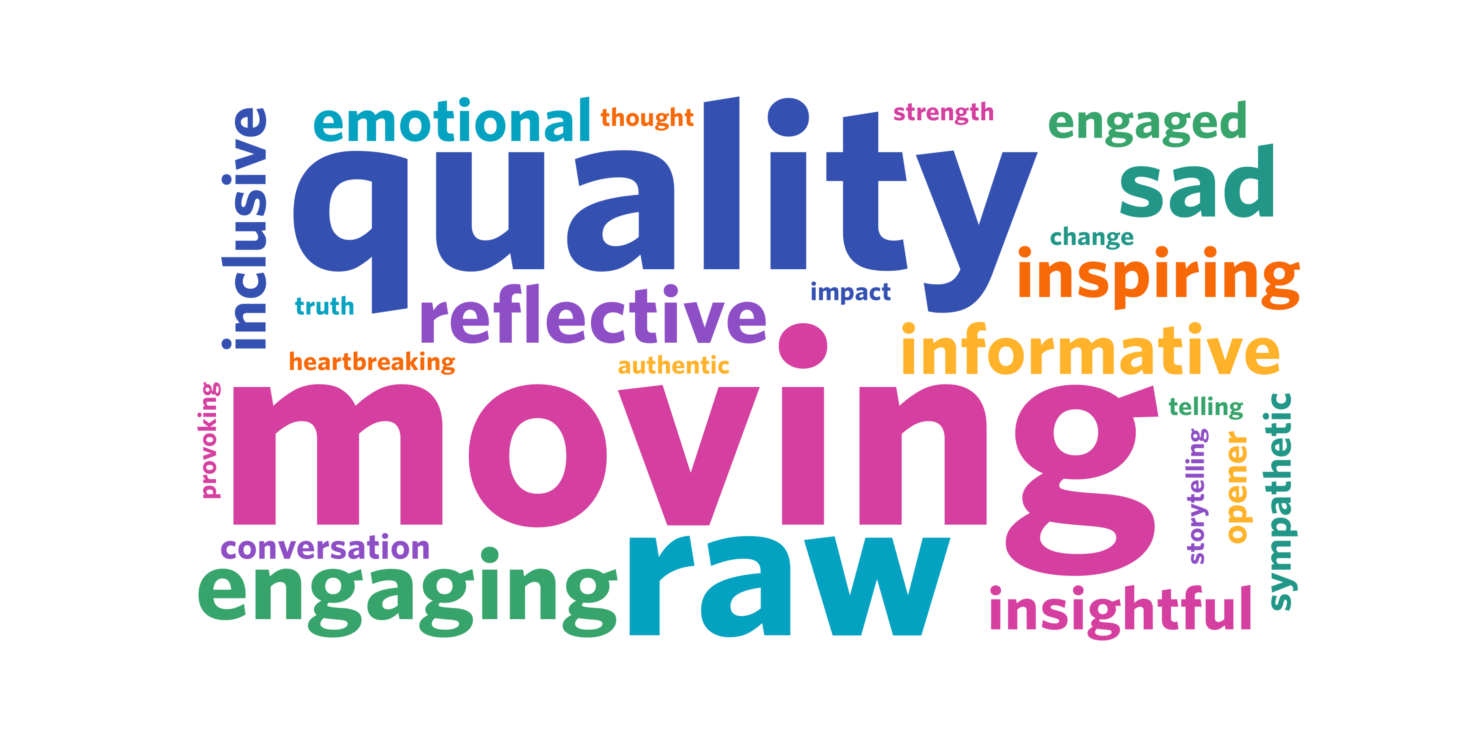
Respondents were asked to provide three words that would describe their experience or perspective of the event. The most common responses have been visualised in the word cloud below.
Qualitative feedback was collected from participants via free text responses, written in a guestbook. A selection of comments from each location visited is listed below, including responses collected during yarning circles and a showing at Malthouse Theatre.
“Too deadly!!”
“Loved the show. Better than ACDC and Midnight Oil. Always was, always will be.”
“This is [the] deadliest story and dreamtime to share thankyou for involving us all in your journeys, keep up the deadly music. Big love”
“It was better than a movie. Like, when you see a band normally, its just song, song song and it doesn’t take you anywhere. But the way you had the story in it, really took you in. You followed where it was going. It got you here ([respondent] holds heart).”
“It really lifted my spirit, thank you”
“Black loud and proud”
“I really needed that. I lost my brother-in-law last week and I really needed that. Thanks.”
“It inspired me to go and write music”
“Keep the fire burning. Blak n Proud.”
“Thanks for sharing your journey with us. As an Aussie girl it was beautiful learning about your culture. Thanks for a great show and don’t stop entertaining”
“Smashed it, keep making a difference”
“Thanks for the sounds, makes me proud to be a black fullah. Too deadly. Mungo man.”
“Mad show, thanks heaps brothers”
“The best Blackfella show I have ever seen. Thanks brothers and sisters ❤️❤️❤️”
“The play was amazing! Thank you for sharing your gifts and many talents to portray their story and music! Keep being DEADLY and Blak! You all did an amazing job.”
“Massive thank you for making the effort to visit prisons around Victoria. Beautiful story, very entertaining. Keep up the deadly work.”
“For the brief moment you were here, you lifted the chains from our hearts and released our spirits. Thank you.”
“Felt the love boys, much appreciated :)”
“Thanks for caring about us and coming here today. Deadly show well done fellas”
“Deadly show!! You were a bright light in a dull place. Proud Wadawurrung. Loved the show.”
“Thanks for stopping past and the performance very well done thanks, ❤️ A Bunjalung”
“I appreciate you coming in. It made me feel good inside. It was inspiring. Thankyou for coming. Keep the good work up.”
“Thank you all so much for been here it was very good, really good. I like it so much it put me in a good place. I been in here for 24 year and it was very good of you all. Thank you once again.”
“Thankyou so much for bringing your performance to us! One of the best things to happen in my 12 months here!”
“WOW WEE what a performance my mob. What a deadly energy my brothers keep going with sharing our stories, be in touch, Love and Light xoxo”
“So good, how lucky are we. Congrats you made our day, Kind regards, Melody classroom teacher”
“❤️ such an amazing start to the week for us girls – most positive, fun and beautiful energy. Thankyou for performing for us. :) ❤️”
“Exciting, great was a day to remember. Rock the prison big time and thank you guys for taking our minds off being in ‘prison’”
“Amazing – too deadly! Wow – took me back to 1986! So grateful for this performance for our fellas! Please come back :)”
“Absolute cracker of a show 100%”
“Awesome show! Thanks for coming.”
ILBIJERRI also undertook internal thematic analysis of the comments, identifying a series of common themes amongst the anecdotal feedback. The most common themes were:
Additional themes included:
● 5% were inspired by the production to tell their own stories or write their own music
● 4% said it gave them hope and lifted their spirits
● 3% said it was healing
● 2% said it helped them escape from feeling trapped in prison
In 2024, ILBIJERRI undertook the following artist development initiatives: BlackWrights playwright development, Blackstage theatre production and the Ensemble open access performance program. Results from subsequent evaluations are summarised in this section of the report.
Survey respondents were asked to provide their age, gender, identity and postcode.
This data identifies the demographic sample of people who responded to the survey and attended the performance. It enables data to be matched to the wider population and responses to be filtered to understand differences in demographics.
The following charts show the proportion of survey responses captured for each of the demographic questions.
The largest age group of respondents overall were in the 20-29 age bracket (71%). Those aged 30-39 and 40-49 comprised 14% of the sample. The majority of both BlackStage and Ensemble Participant respondents were in the 20-29 age range (75% and 33% respectively).
50% of aggregate respondents were female, 38% identified in another way and 13% identified as male. Respondents were evenly split between male and female respondents in the BlackStage sample (50%) and equal proportions of the Ensemble Participant sample identified as male, female or in another way (33%).
33% of the sample identified as LGBTQIA+ or as a person with disability.
All top postcodes comprised 14.3% of the sample. Each survey attracted respondents from different locations around Victoria, such as Ivanhoe and Ascot Vale (Ensemble Participants) and Broadford (BlackWrights).
Respondents were asked how they would rate their overall experience and their overall experience of participating in the artist development program, with a choice of five options – Excellent, Good, Neutral, Poor and Terrible. This chart shows the percentage of respondents who rated the events overall across these five options and the results per event.
64% of respondents indicated that the program was their first time engaging with ILBIJERRI, with the remaining 36% engaging previously.
Almost the entire sample (97%) had a positive overall experience, an excellent result. Of this, 80% reported their experience as ‘excellent’ and 17% as ‘good’. An additional 3% felt ‘neutral’ about their experience.
Furthermore, 96% of Blak in the Room respondents stated they would be likely to return based on their experience.
Feedback helps organisations understand where the value of visitor experiences lies and how they can be improved and strengthened in the future. A selection of comments have been highlighted underneath.
Such a great initiative and a long time coming! I hope we see a lot more of this kind of collaboration, thanks for taking the leap of faith to open up what can seem to be the 'hallowed' space. I really hope it brought new and diverse audiences into MTC, and that the current subscribers also loved it, so that there is support down the track for more seasons, more collaborations. Thank you and congratulations to both companies, with a special mention to Amy Sole.
Really excellent, all 3, very different theatre styles but each excelling in every department of their theatre genre. I hope it tours all over Australia and globally, including any and everywhere they have ever dreamed of performing.
The performance was incredible. Funny, poignant, excellent actors. Looking forward to next year.
All three shows spoke to the ways all us mob process grief and laughter, the whole spectrum of emotion, and how Community and Culture gives us space to be and feel whole. Each set held space beautifully and conveyed the emotion of its scenes without distraction.
Survey respondents were asked to provide their age, gender, identity and postcode. An additional questions asked respondents whether they identified as Aboriginal and/or Torres Strait Islander.
This data identifies the demographic sample of people who responded to the survey and attended the performance. It enables data to be matched to the wider population and responses to be filtered to understand differences in demographics.
The following charts show the proportion of survey responses captured for each of the demographic questions.
Those aged 50-59 comprised 32% of the sample, followed by those over 60 )28%). Similar proportions of 30-39 year olds and 40-49 year olds (20% and 26% respectively) also engaged with Blak in the Room. Those aged 20-29 comprised 4% of the sample.
The majority of respondents identified as female (88%), followed by those who identified in another way (12%). There were no instances of male respondents in this sample.
24% of the sample identified as LGBTQIA+, followed by those who were born overseas (16%). Equal proportions of the sample identified as a person with disability or as a person who uses a language other than English at home (12%). 56% of the sample did not identify with any of the options provided. The majority (93%) of respondents did not identify as Aboriginal and/or Torres Strait Islander.
West Footscray and Richmond were the most-commonly cited postcodes (8% each).
Over half of the sample (64%) had not engaged with ILBIJERRI prior to attending Blak in the Room, suggesting the program’s strong ability to engage new audiences.
96% of the sample had a positive overall experience. Of this, 81% described their experience as ‘excellent’. The same proportion (96%) indicated they were likely to return based on their experience.
A Wake – A Woke Mob was seen by 68% of the sample, followed by 56% attending Gunawarra Re-creation. 28% of the sample saw Emu in the Sun.
The most common way to find out about Blak in the Room was via Melbourne Theatre Company’s (MTC) Social Media. Equal proportions of the sample (28%) discovered the event from being a friend, family member or colleague of an artist, or were invited by MTC. 20% of the sample received an invitation from ILBIJERRI or discovered the event from their enews.
Survey respondents moved a slider to indicate whether they agreed or disagreed with the included dimension statements in relation to the event. The first tab chart contains the response data for 'public' responses, showing the average result for each dimension.
The second tab shows the interquartile range of responses for each dimension. These ranges represent the middle 50% of responses, which are areas on the slider where most responses typically fell. Accompanying this range is the median result for each dimension (i.e. the most common response). Smaller ranges indicate similarity in agreement between respondents, whereas larger ranges indicate a wider spread of responses.
The Culture Counts platform provides various methods to capture survey responses at a minimal marginal cost. Achieving larger samples enables organisations to be more confident about the average results and that opinions of the survey respondents are representative of all attendees. The accompanying margin of error chart shows the expected differences for the associated dimension results calculated at a 95% confidence level.
Responses have been aggregated due to a small sample size.
Both ‘Safe’ and ‘Rigour’ achieved the same average of 94/100, suggesting respondents were highly likely to agree that they felt safe and welcome and that it was well thought through and put together. The interquartile range for 'Safe' was the largest of the two dimensions, suggesting responses to this statement were the most varied amongst the sample.
The margin of error ranged from 3.1% to 6%. Margin of error results that exceeded 5% are the result of a small sample size and may not be a true reflection of the entire population results.
| Survey Name | N. of Responses |
|---|---|
| BITR Audience 2024 | 28 |
| BNNB Audience 2024 v2 | 93 |
| BlackStage 2024 | 4 |
| BlackWrights 2024 | 1 |
| ELP 2024 | 5 |
| Ensemble Participants 2024 | 3 |
| Goodbye Aunty Flo - Artist and Production Team Feedback KH | 5 |
| Goodbye Aunty Flo Audience Survey March 2024 KH | 198 |
| Goodbye Aunty Flo Sector Survey March 2024 KH | 5 |
| Scar Trees 2024 | 22 |

This report has been prepared by Shelley Timms and Jamie McCullough of Culture Counts. The authors would like to thank all stakeholders and staff for their participation in this research.
Approved by: Erin Lockyer
Date of Approval: 8 August 2025
We respectfully acknowledge the Traditional Owners of Country throughout Australia and recognise the continuing connection to lands, waters and communities. We pay our respect to Aboriginal and Torres Strait Islander cultures, and to Elders past and present.