Woollahra Municipal Council oversees the Double Bay, Watsons Bay and Paddington library branches in Sydney’s Eastern suburbs. The library service has participated in the Public Library Evaluation Network since 2022.
They now collaborate with other libraries in the local area, namely Inner West Libraries and City of Sydney Libraries, to coordinate their evaluation efforts.
“I think it has been good to consider the timing of our PLEN surveys. Inner West, the City of Sydney and us all share members. Staggering the reports hopefully minimised confusion.”Woollahra Municipal Council
Requirements
Jody Rodas, Manager at Woollahra Libraries, sought to work with the other two libraries for the purpose of:
- Avoiding survey fatigue, timing the distribution of the Library Use and Outcomes survey to account for the overlap in membership databases.
- Understanding how people are engaging with the library when they visit.
- Ensuring efficient planning to ensure a streamlined annual report that is presented to council the each year.
Approach
Culture Counts’ Public Libraries Evaluation Network gives members access to standardised survey templates that are aligned to their reporting requirements. This consistent approach to evaluation allows members to compare and benchmark results with one another, via our Power BI dashboard or through internal communications.
“City of Sydney reached out in February 2025 so that the three libraries could coordinate the distribution of the survey to our communities, learn from each other as to how we are using the platform and experiment with adding additional questions in a uniform way,” explained Jody.
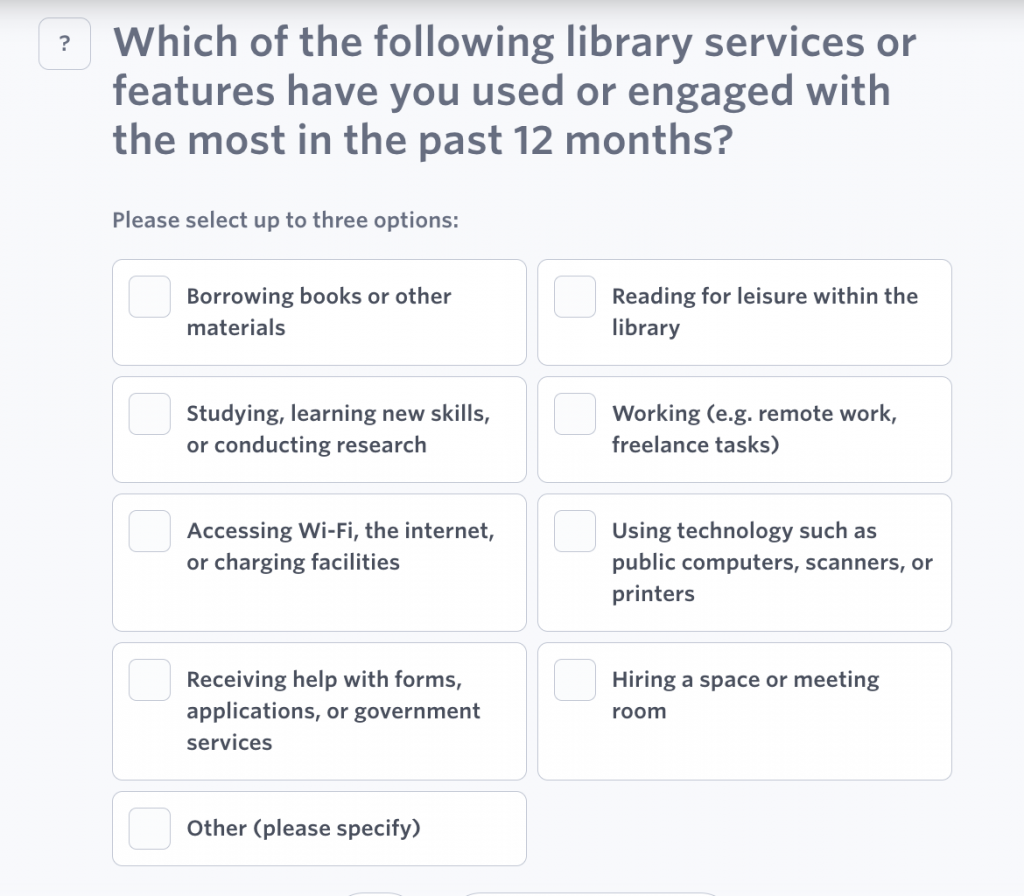
The group came up with some additional questions to include in their annual Library Use and Outcomes survey, which helped provide greater context around how their members are using the library. Custom questions included a multiple-choice list of library services and features, as well as a marketing question.
The group also utilised the Question Bank in their surveys, with the addition of the Net Promoter Score question.
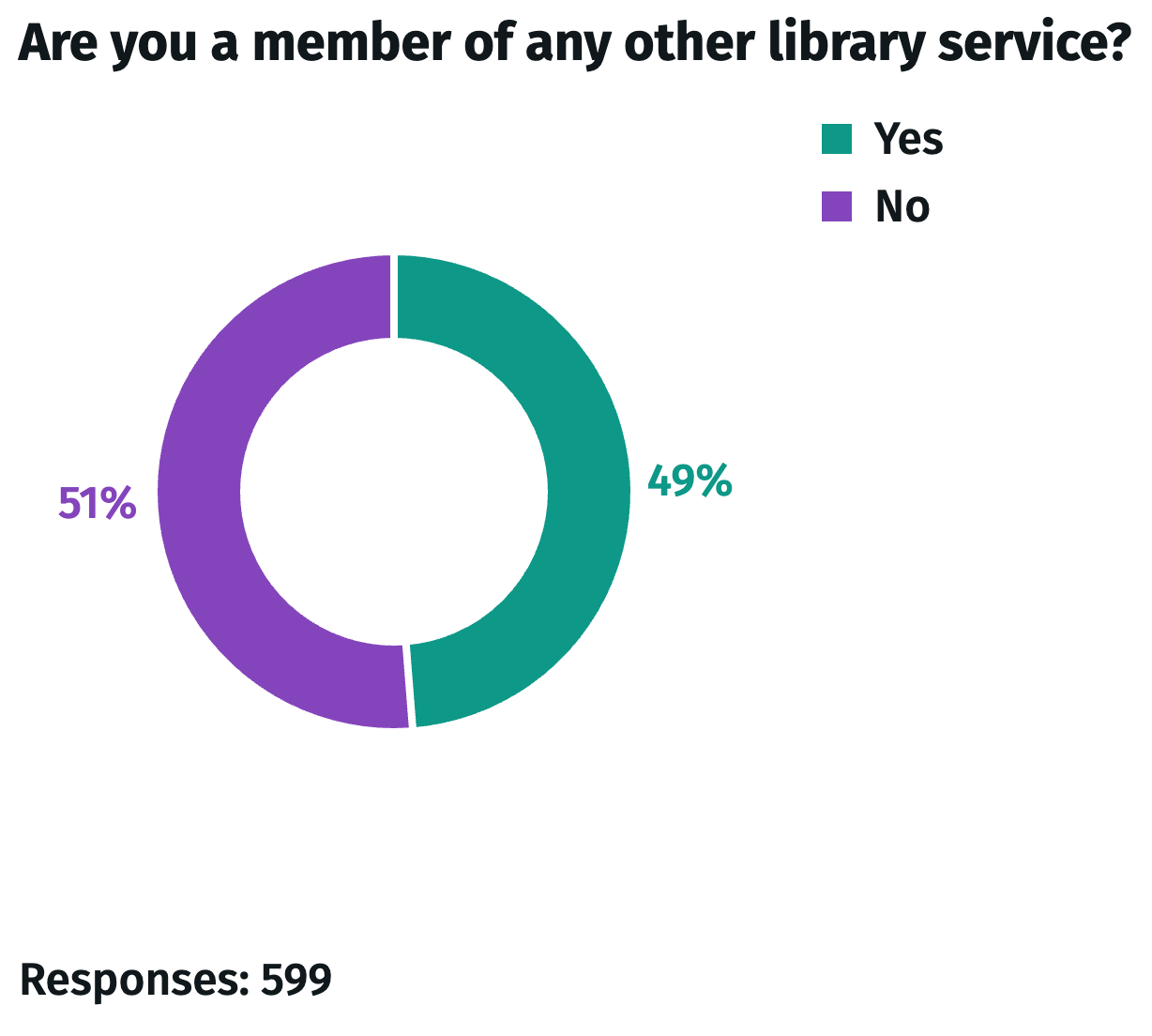
An additional free text question about other library memberships the respondent may have also assisted them in ascertaining the extent of engagement between the three services.
Collaboration among these libraries has also benefited the larger community, with features such as translations becoming more accessible for those using the Library Use and Outcomes template.
“We use the PLEN insights report as a way of reporting to our council on impact and satisfaction. We do this annually. We prepare an annual report that features all of the data on loans, visits, programs etc and present the two reports to Council together.”
Outcomes
By adopting a collaborative approach, Woollahra Libraries has been able to understand how their members not only engage with their own library branches but also the ones in surrounding areas. Avoiding survey fatigue by timing survey distribution ensures that responses are honest and accurate, meaning each library can delve into its individual results and also assess them on an aggregate scale.
The social, cultural and community impact of libraries also becomes more prominent as the dataset grows, particularly in a geographical context. Outcomes such as ‘Role’, which measures how much respondents agree that the library is an important part of the place where they live, can be pivoted by location in aggregate reporting. In 2025, 93% of respondents in the Woollahra Libraries’ annual survey agreed with this statement.
Furthermore, custom questions provide statistical proof that there is an overlap in memberships and that the library is being utilised in broad and meaningful ways.
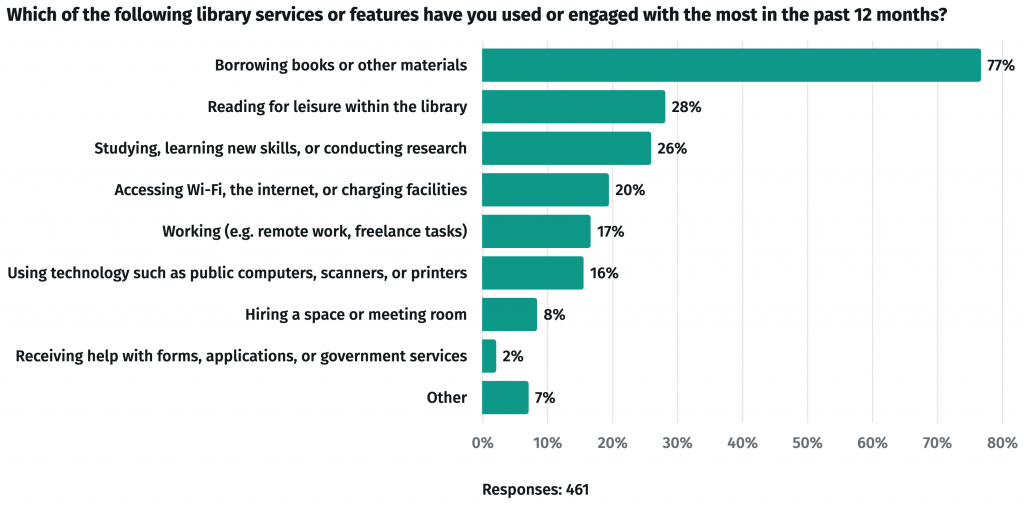
Using the library for ‘borrowing books and other materials’ (77%) and ‘reading for leisure within the library’ (28%) are still the most popular ways that respondents are engaging with the library, but data shows that other public resources (computers, WiFi, meeting rooms) attract patrons.
Results for ‘Studying, learning new skills, or conducting research’ (26%) and ‘Working (e.g. remote work, freelance tasks)’ (17%) also speak to the ALIA strategic pillar of Economic and Workforce Development (EAWD). The Public Libraries Evaluation Network framework also includes qualitative statements that measure this outcome area, via a sliding scale.
“Over the years, we have used feedback – particularly the free text sections as evidence to successfully advocate for service improvements e.g.
– Upgraded AV at Paddington Library
– Extended hours at Watsons Bay Library
– Removal of overdue fines.”
“I think it has been a really useful tool, and after 4 years we have collected a lot of useful data.”
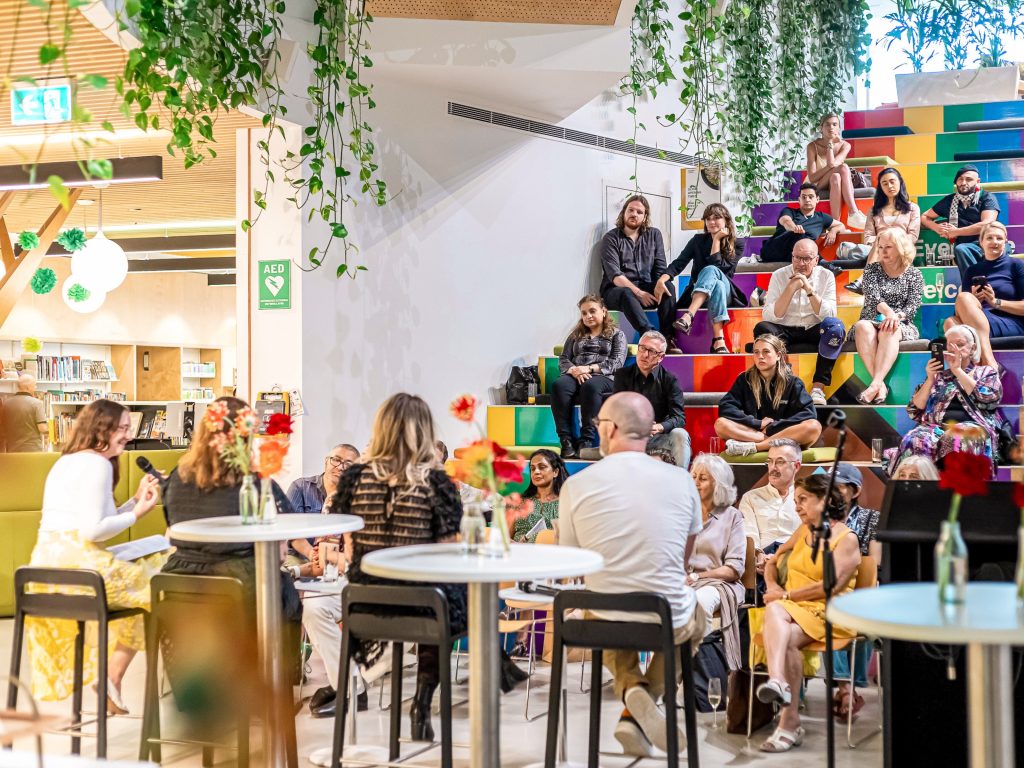
Image: Double Bay Library, courtesy of Woollahra Municipal Council